ChromaCorp
System Designer, Programmer
ChromaCorp is an Indiecade Award winning project. I worked as a system designer, puzzle designer and programmer.
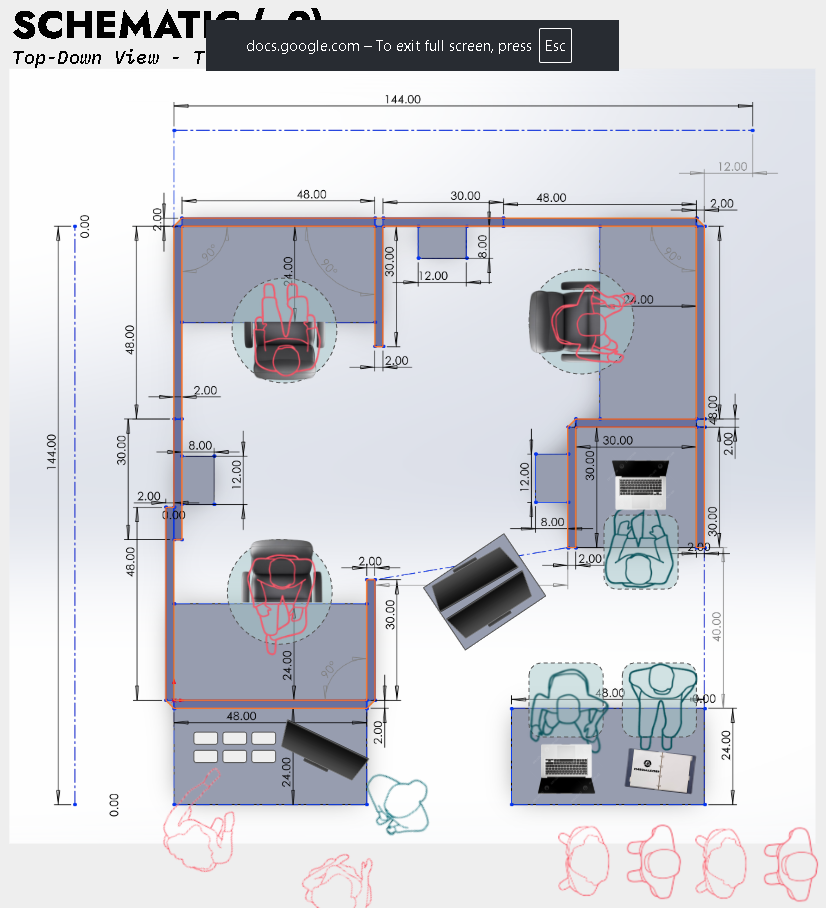
ChromaCorp is a immersive experience where players work for a dystopic company. Players walk into a physical cubicle and work to take down the megacorporation ChromaCorp through mini games and puzzles that use custom controllers.
Designing the Pigmentation Pipes Puzzle
ChromaCorp is composed of 7 mini games that contribute to the macro goal of taking down the company through acts of subversion. The Pigmentation Pipes Puzzle is an act of subversion that destabilizes the production of color in the ChromaCorp system. The goal of the puzzle is to direct the valves to make the color flow from the start to an exit of the same color short circuiting the system.
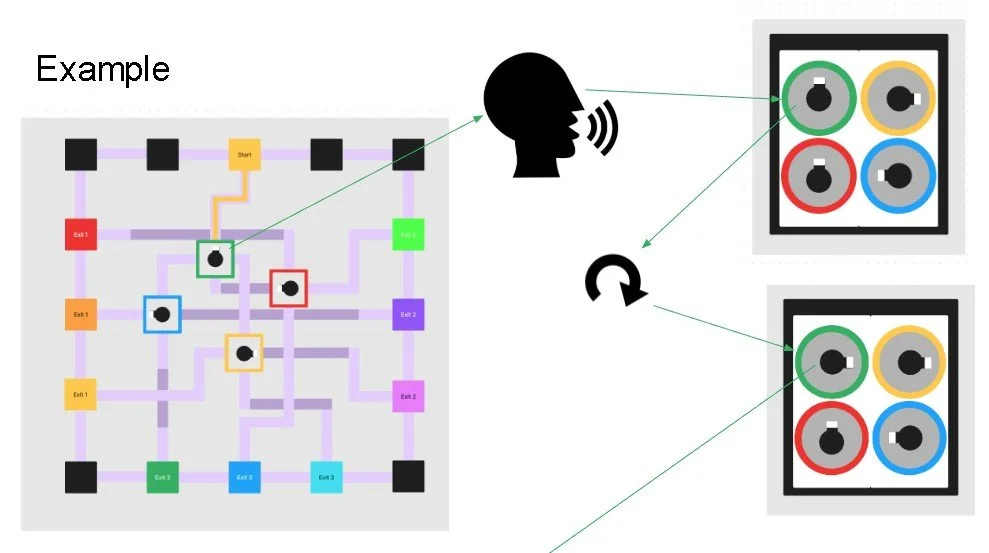

ChromaCorp is a game played in physical space using custom controllers. The goal was to make cooperative puzzles that made multiple people feel involved as such the puzzles have two parts the physical controller’s station and the screen at player’s desks. One player would see the screen and give verbal directions while the other followed the directions interfacing with the custom controller.
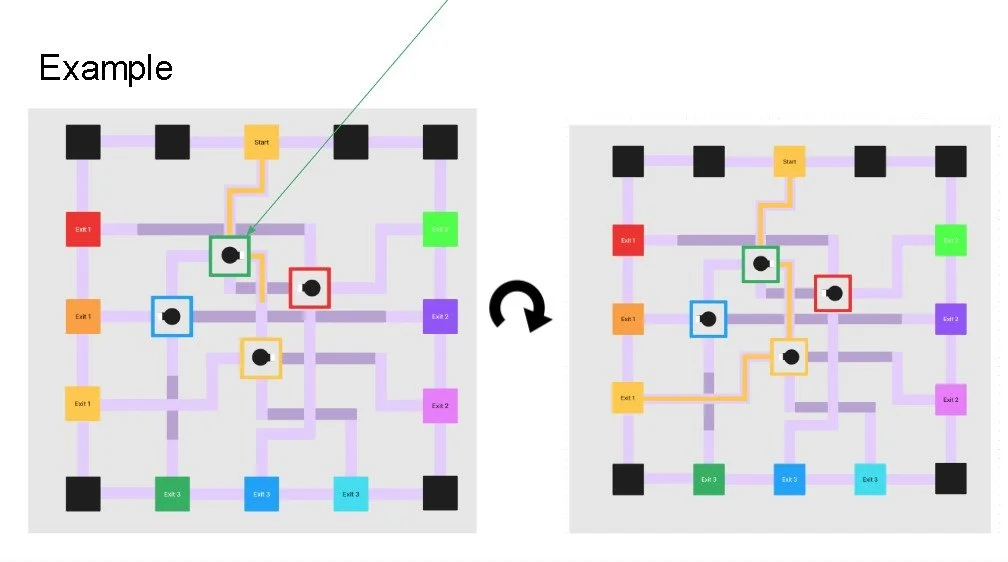
The player at the computer see’s the puzzle and directs the player at the physical station to turn the valves clockwise or counter clockwise altering the flow of the pipes. This reflects on the monitor repeating until time runs out the fluid reaches its end goal.
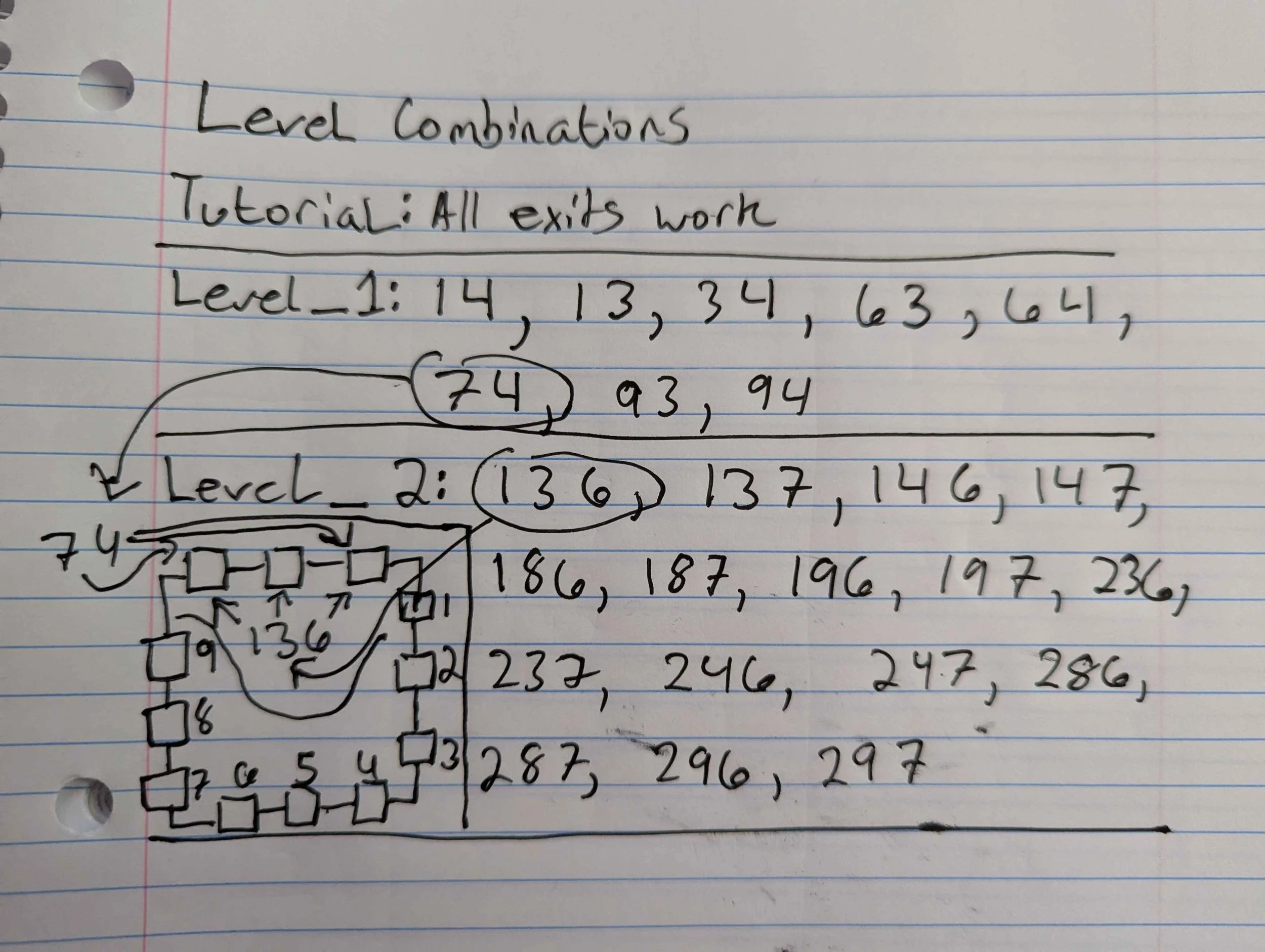
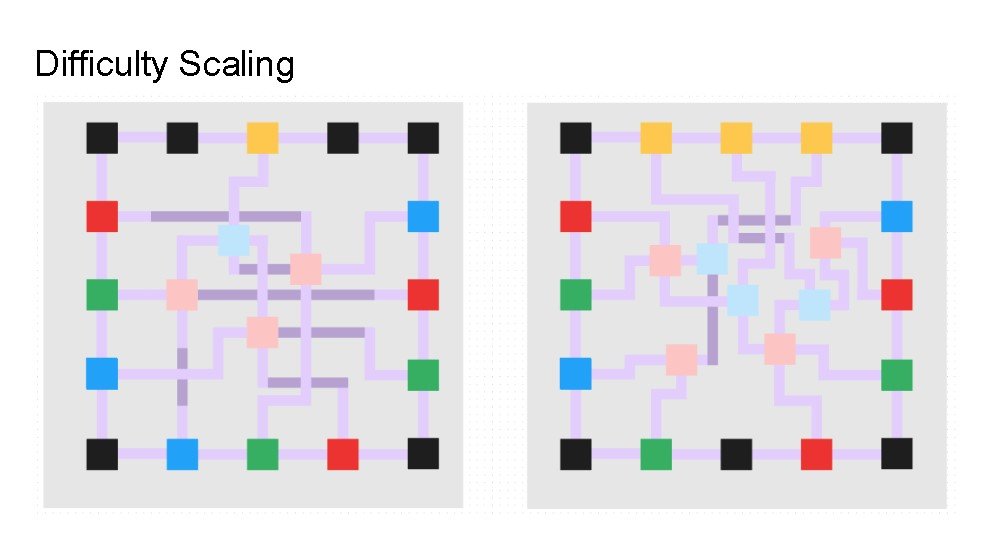
The puzzle may be played multiple times and so each puzzle was built to have multiple variations as well as multiple difficulty levels. Puzzles are often about creating restrictions so that limited solutions are available. This scratch paper shows the different combinations for each stage of the puzzle.
Each stage of difficulty added another color that needed to be sorted. This early render shows how the first level on the left has only one color to sort (yellow square) and the third level on the right has three colors. The colors were randomized on each puzzle instance to make it less obvious if a puzzle was reused. By combining color randomization with different variations of each puzzle replayablity was not an issue.
Ultimately playtesting revealed that more difficult puzzles were challenging within the limited timeframe. This led me use only two puzzle variations that had more linear paths. By reducing the complexity of the puzzles the emphasis shifted to the cooperation between players giving them a greater sense of teamwork.