Shots in the Dark
Level Designer
I worked as the level designer for Shots in the Dark, a top down local PVP shooter where gunfire is players primary light source as they fight through warehouses, factories, and research laboratories.
Light
As the name suggests Shots in the Dark has players fight in the dark this makes light extremely important when designing levels. The primary light source is player gunfire. While shooting rewards the shooter with eliminations it carries the cost of revealing the shooters position to all players. This allows for varied strategies such as the guns blazing approach that keeps the map constantly lit with gunfire or a slower cat and mouse approach where players navigate the darkness in an attempt to get the jump on their opponents.
Map Lighting
I used slowly pulsating lights to help with pathfinding and as a means to keep players moving. In particular native map lighting helps encourage strategies where players lurk in the dark into a proactive rotation heavy playstyle rather than a stationary ambushing playstyle.
Protected Rotations
As previously discussed light helps with player pathfinding but some maps also feature mechanics that help players rotate safely. In particular there are some structures that players can pass through. In order to keep players from losing track of their player character the structures shift from opaque to translucent when players are inside them.
Level Design Process
Initial Roughs
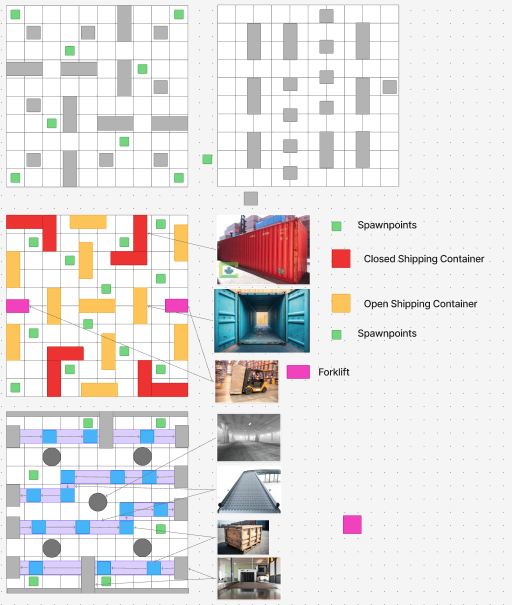
Initial level roughs I did by creating a grid system and with key in Figma. The initial concept of the game was to make a exciting close quarters top down shooter that centers on the visual flare of gunfire to keep things exciting. The top down arcade nature of the game makes aim less precise than other shooter genres and so the maps were all themed to be in close quarters spaces.
Blockout Phase
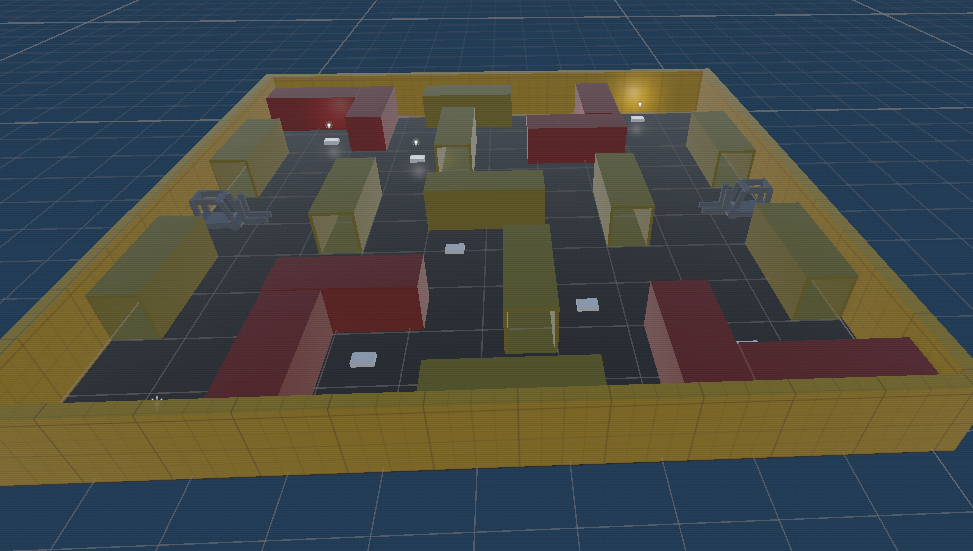
After the first few maps were designed they were built using primitives. This allowed us to conduct early playtest before settling on the 3d visual style of the game.
Final Renders
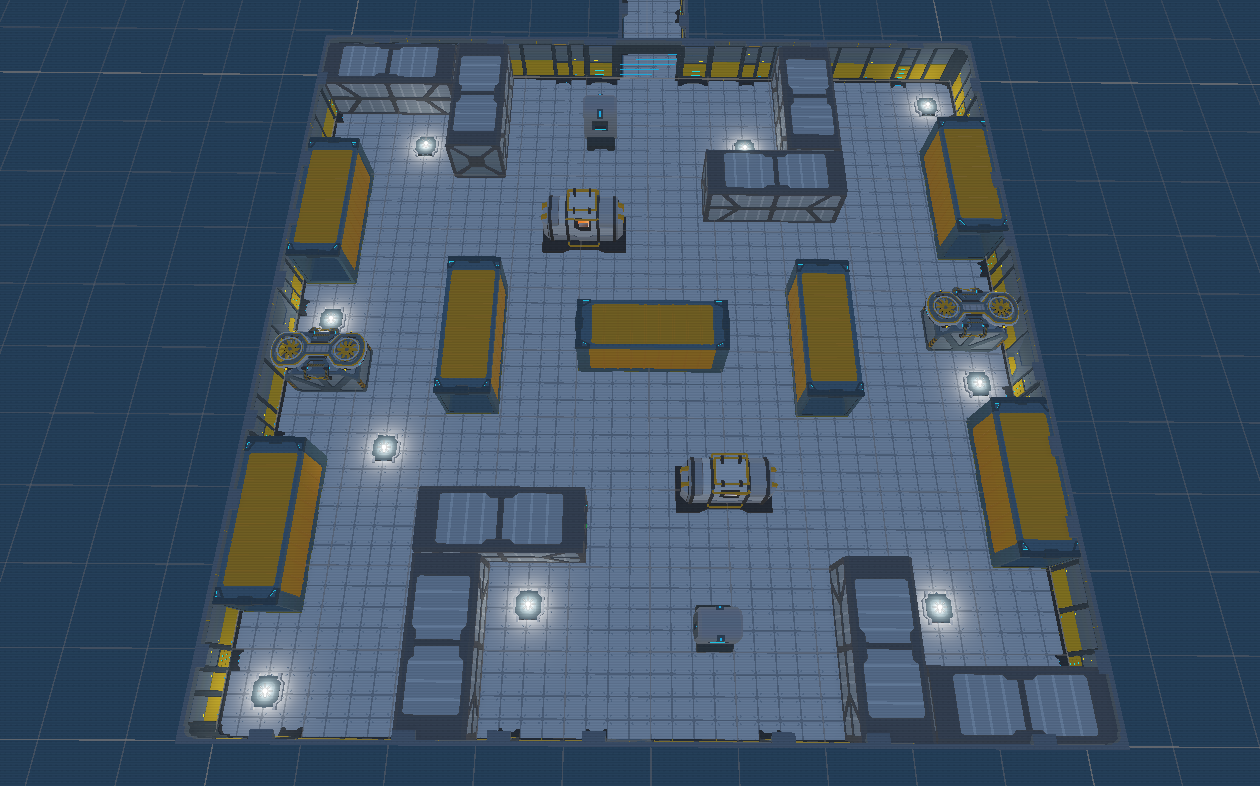
After settling on a 3d art style the levels were built out and metrics were adjusted. I implemented more negative space to ease pathfinding and utilized smaller pieces of cover so that rotation paths were less telegraphed. This is also the stage in which I began to add dynamic lighting and moving cover which adds flavor to each level.
Environmental Storytelling
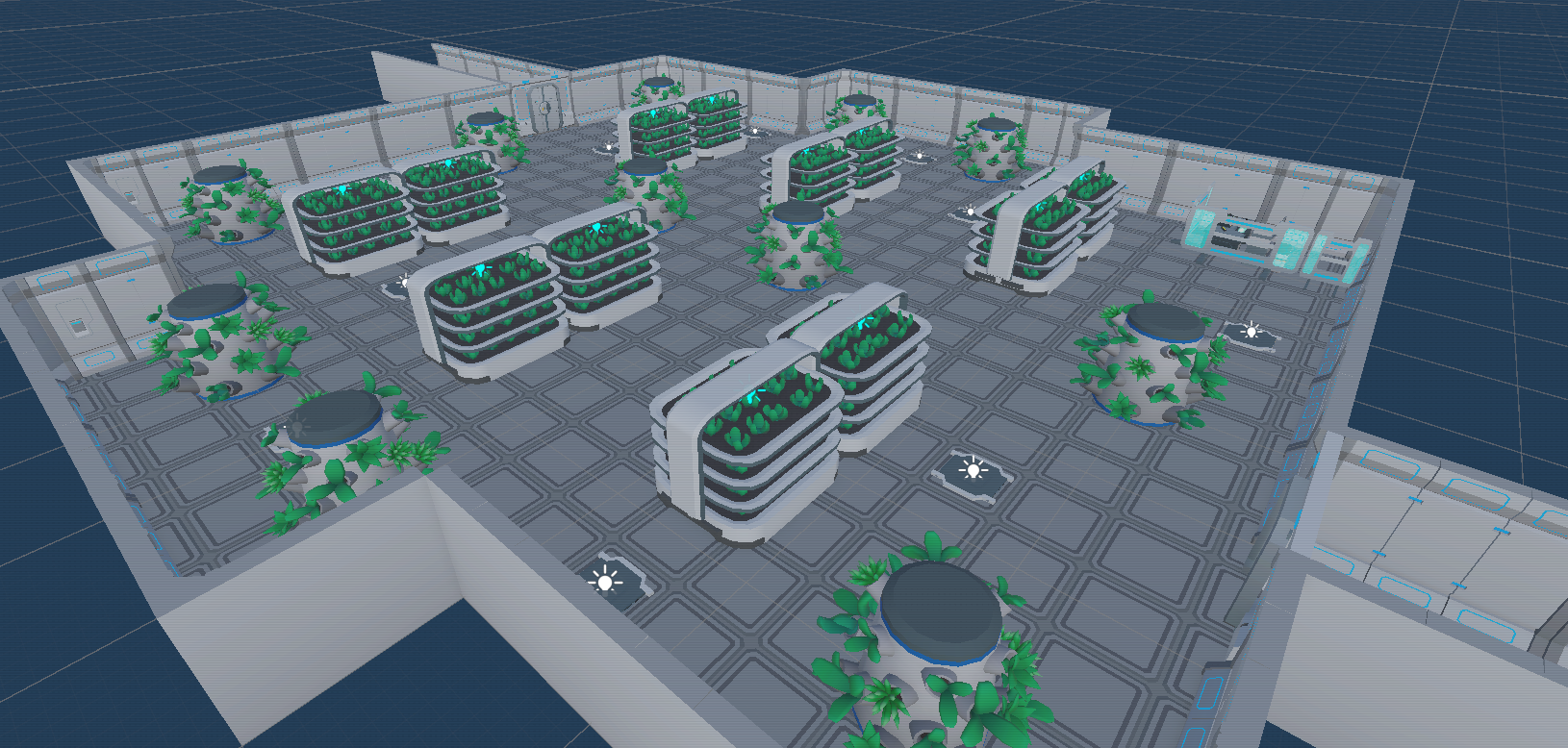
Each map lends itself to different gameplay strategies but it also informs the player about the space they’re in. Each map’s function is visually apparent at a surface level; the room with all the plants is doing some sort of farming or research, and the factory map is producing or modifying the cubes passing through it. However to gain deeper narrative understanding the player needs to piece together menu descriptions. This helps to fulfil players need for exploration as they must think critically about the space they see and what the scattered text says about it.